Recent Posts
Actium: The Battle That Made the Empire
The Battle of Actium on September 2, 31 BC was not a particularly impressive naval engagement by the standards of ancient warfare. It was not especially close, not especially bloody, and not decided by brilliant tactics or unusual courage. What it was, was decisive in the way that very few battles actually are: it determined who would rule the Roman world for the next five centuries and set the conditions for everything that followed. Octavian defeated Mark Antony and Cleopatra at Actium, and Rome became an empire.
Alexandria: Rome's Second City
Alexandria was not a Roman city. It was a Greek city under Roman administration, founded by Alexander the Great in 331 BC and designed from its inception as a world capital — a city that would connect the Mediterranean world to Egypt and, through Egypt, to the trade routes of the East. By the time Rome absorbed it as part of Egypt following Cleopatra’s death in 30 BC, Alexandria was already three centuries old, the second-largest city in the Mediterranean after Rome itself, and possessed of institutions — the Library, the Museum, the great lighthouse — that Rome had nothing to rival. The Romans did not conquer Alexandria so much as inherit it, and the inheritance was complicated.
Augustus: The Man Who Saved Rome by Ending It
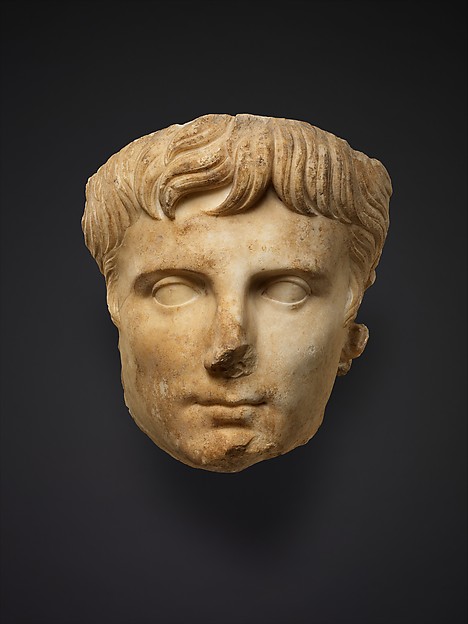
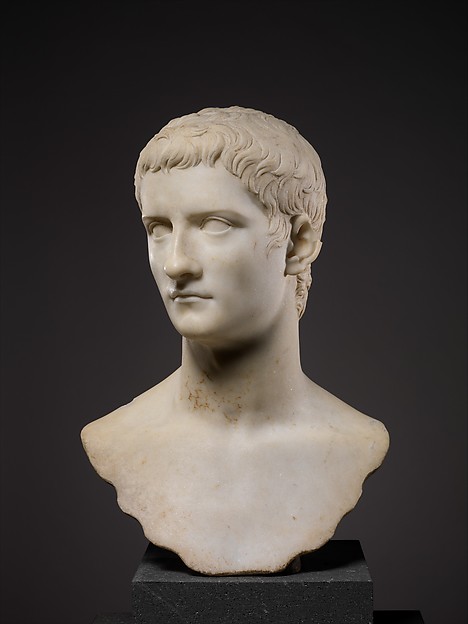
Gaius Octavius was eighteen years old when Julius Caesar was assassinated in 44 BC, and nobody thought he mattered. He was Caesar’s great-nephew, slight and sickly, without military reputation or political standing. He had one asset: Caesar’s will named him adopted son and primary heir. He used that asset with a patience and calculation that none of his older, more experienced rivals understood until it was too late.
The name by which history knows him — Augustus, the revered one — was a title conferred by the Senate in 27 BC, seventeen years after Caesar’s death and four years after he had defeated Mark Antony and Cleopatra at the Battle of Actium, eliminating the last serious rival to his control of the Roman world. Between the teenager nobody feared and the man the Senate was now calling Augustus lay fourteen years of civil war, shifting alliances, calculated betrayals, and the systematic elimination of everyone who stood between Octavian and sole power. He was very good at it.
Byzantium: The Rome That Refused to Fall
The Byzantine Empire called itself Rome. Its citizens called themselves Romans. Its emperor held the title that Augustus had held. Its laws were Roman laws. Its language of government was Latin until the seventh century, when Greek — which had always been the spoken language of the eastern provinces — became official. The entity that modern historians call Byzantium would not have recognized the name: it was Byzantium only in retrospect, named by scholars for the ancient Greek city on whose site Constantine had built his new capital. To everyone who lived in it, from Constantine’s founding of Constantinople in 330 AD to the Ottoman conquest in 1453, it was simply Rome. That it had relocated, that the western half had collapsed, that Germanic kings sat in Ravenna and eventually in the city of Rome itself — none of this changed the self-conception of an empire that understood itself as continuous with Augustus.
Cannae: The Battle That Should Have Ended Rome
On August 2, 216 BC, on a flat plain near the Aufidus River in southern Italy, the Carthaginian general Hannibal Barca destroyed a Roman army of approximately 86,000 men in a single afternoon. Somewhere between 47,000 and 70,000 Romans died — the numbers vary by ancient source but the scale is not in dispute. It was the bloodiest day in Roman history, possibly the bloodiest single day of battle in the ancient world, and it accomplished nothing. Rome did not fall. It did not negotiate. It raised more legions and kept fighting.
Carthage: The City Rome Had to Destroy
Carthage must be destroyed. The phrase — Carthago delenda est — was reportedly repeated by Cato the Elder at the end of every Senate speech he gave, regardless of the speech’s actual subject, in the years before the Third Punic War. It is probably apocryphal, or at least exaggerated, but it captures something true about the Roman relationship with Carthage: a fear and hostility so intense that it could only be resolved by elimination, and a political culture prepared to act on that resolution against a city that had been, by the 140s BC, effectively defanged by the terms of its previous defeat.
Cicero: The Man Who Talked Too Much
Marcus Tullius Cicero was the greatest orator Rome produced, possibly the greatest the ancient world produced, and he was killed for it. His head and his right hand — the hand that had written the Philippics, the series of speeches attacking Mark Antony — were displayed on the Rostra in the Roman Forum by Antony’s orders in 43 BC. Antony’s wife Fulvia reportedly pushed hairpins through the tongue that had destroyed so many reputations with such elegance. The story may be exaggerated. The impulse it describes was not.
How Roman Names Worked
Roman naming conventions are among the more counterintuitive aspects of the culture for modern readers, and the confusion they generate is not merely academic. Understanding Roman names is understanding something important about Roman identity, social structure, and the relationship between the individual and the family — a relationship that was organized very differently from the modern Western model.
The classical Roman name for a male citizen of the Republic consisted of three parts: the praenomen, the nomen, and the cognomen. The praenomen was the personal name — the equivalent of a first name — but it was used almost exclusively within the family. Romans did not address each other by praenomen in public contexts. There were very few praenomina in use — approximately eighteen were common, and many families used only two or three across generations — which meant that they were not functionally distinctive at any scale beyond the household. The praenomen was abbreviated in writing: Gaius became C., Marcus became M., Lucius became L. (confusingly, since Gaius was abbreviated C rather than G, a legacy of archaic Latin spelling).
How Rome Took Cities: The Art of the Siege
The Roman legion was designed for open battle, but Rome won its empire through sieges as much as through field engagements. The ability to take fortified positions — to reduce cities that refused submission, to breach walls that geography or construction made seemingly impregnable — was as central to Roman military power as the legion’s battlefield performance. Siegecraft required different skills, different equipment, and different timescales than open combat, and Rome developed all three to a level of systematic competence that its opponents rarely matched.
How the Roman Republic Actually Worked
The Roman Republic is frequently invoked and rarely understood. Politicians cite it as a model of balanced governance. Historians treat it as the prelude to empire. Both framings miss what made it functional for four centuries and what made it impossible to sustain once Rome outgrew the conditions it was designed for.
The Republic was not a democracy. It was an oligarchy with democratic elements, calibrated to preserve the power of a landed aristocracy while providing enough popular participation to maintain legitimacy. The Senate was not elected. It was a body of former magistrates, predominantly from noble families, that served for life. Real legislative power resided in the popular assemblies, but those assemblies were structured to weight the votes of wealthy citizens more heavily than poor ones. The system produced decisions that reflected the preferences of the propertied class while maintaining the form of popular consent.