The Roman Domus: How the Wealthy Lived
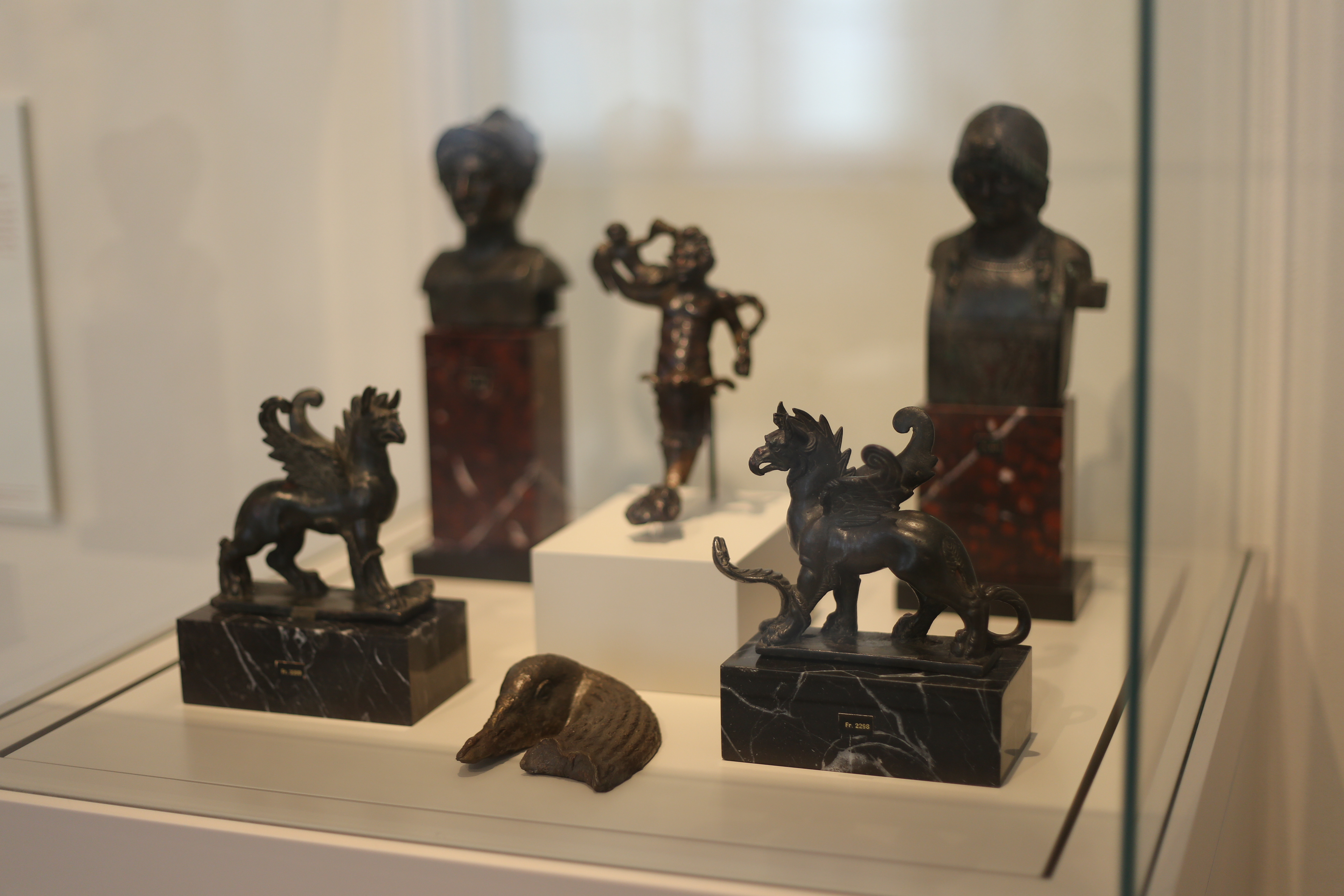
A museum case in Berlin’s Altes Museum holds a collection of Roman domestic bronzes from Rome and Pompeii, first through fourth century AD, under a label that states its subject with admirable directness: Luxury in the Roman house. The contents repay attention. Two griffins — mythological hybrids of eagle and lion, rendered with precise musculature — served as the decorative supports of a folding table, their bodies forming the legs, their wings providing the lateral bracing. A satyr and nymph group, extravagantly detailed, formed the foot of a large bronze vessel. Small bronze ducks and swans — the fulcra — decorated the scroll-ends of couches and dining beds, the curved terminals that distinguished a proper Roman reclining couch from mere functional furniture. Two portrait busts on red marble pedestals completed the ensemble. None of this was structural. All of it was mandatory, in the sense that a wealthy Roman household without this level of decorative investment was announcing, inadvertently, that its owner could not afford it.
The Roman domus was a social instrument before it was a domestic space. Its organization was designed for the management of the patron-client relationship that structured Roman elite life, and every element of its layout and decoration served that management function. The atrium — the central hall entered directly from the street through the fauces, the narrow entrance passage — was the first performance space. Visitors of all social levels were received there, from senators to the humblest clients presenting themselves for the morning salutatio. The impluvium, the shallow pool set into the atrium floor to collect rainwater through the compluvium opening in the roof above, was both practical and aesthetic: the play of light on water in the room’s center announced that you were in a house of sufficient resources to build around an open sky.
Beyond the atrium, the tablinum — the master’s office, open to the atrium on one side and the garden on the other — was where the paterfamilias conducted his formal business. The ancestral masks, the family documents, the records of patronage and obligation: all of this was housed here, visible from the atrium to impress waiting clients with the depth of the family’s history. The peristyle garden behind it was private space, accessible to fewer visitors, decorated with fountains, sculpture, and plantings that represented a different register of wealth — not the public performance of the atrium but the refined leisure of a family that could afford beauty in spaces only intimates would see.
The furniture that filled these spaces was as carefully calibrated as the architecture. Roman elite furniture was predominantly made from expensive imported woods — citrus wood from North Africa was the most prized, followed by maple, ebony, and various exotic timbers whose rarity was part of their value — fitted with bronze hardware of the type visible in the Altes Museum case. The legs of tables and couches were carved or cast into animal forms: lion’s paws were standard for table supports; griffin legs for folding tables were the more elaborate variant. The fulcra — the couch scroll-ends — were cast bronze typically depicting a mule’s head, a horse, or water birds like the ducks and swans in the Berlin case. The mythology was never arbitrary. Griffins guarded treasure in Greek tradition, making them appropriate supports for the surfaces on which valuable objects were placed. Water birds evoked the symposium’s relaxed pleasures. The satyr and nymph on a vessel foot brought Dionysian reference into the dining room without requiring a temple dedication. Every object made an argument about the cultural literacy of its owner.
The dining room — the triclinium — was the most socially significant space in the private house because it was where the convivium, the dinner party, took place, and the convivium was the primary mechanism of Roman elite socialization. The three couches arranged around the central table gave the room its name, and the arrangement was not casual: specific positions on specific couches indicated rank, and the host’s placement of guests communicated the current state of relationships with a precision that no spoken declaration could match. The food served, the wine offered, the tableware displayed — all of it was legible to guests who had spent their lives reading exactly these signals. Bringing out the silver plate for some guests and the ceramic for others was not accidental. Serving the good wine to some positions at the table and the inferior to others was not oversight. The dinner table was where Roman social hierarchy was performed and reinforced with the most consistent regularity of any institution outside the formal political apparatus.
The decorative program of the walls added another layer. Roman elite houses were painted continuously, in the elaborate illusionistic styles that Pompeii has preserved — the Second Style’s architectural fantasies, the Third Style’s refined decorative panels, the Fourth Style’s theatrical combinations of architectural and mythological imagery. The mythological scenes were not decoration in the modern sense of aesthetic background. They were demonstrations of the owner’s education, selecting stories from Greek mythology that rewarded identification by visitors who shared the same literary formation. A triclinium painted with scenes from the Odyssey told guests that the host had read Homer, had the wealth to commission skilled painters, and inhabited a cultural world that took Greek mythology as seriously as any educated Greek. The painting was a credential, displayed at every dinner.
The bronzes in the Berlin case — the griffins, the satyr, the waterfowl, the busts — represent a household whose owner had resources sufficient to commission custom-cast mythological furniture fittings, portrait busts for display, and decorative objects whose primary function was to communicate sophistication. The griffin table would have stood in a room whose walls were painted, whose floor was mosaic, whose ceiling was coffered, and whose tableware was silver. The total effect was immersive and intentional: an environment engineered to produce a specific impression on everyone who entered it.
What the domus could not accommodate was privacy in the modern sense. The house was a public-facing instrument, and the paterfamilias’s daily life was structured around the obligation to be accessible — to receive clients in the atrium, to conduct business in the tablinum, to host in the triclinium. The private rooms — the cubicula, the bedrooms — were small by the standards of the public spaces, tucked around the edges of the peristyle, unlighted by windows that opened to the street. The Roman wealthy lived much of their waking life in spaces designed for an audience. The domesticity that the decorative bronzes suggest — the lovingly detailed duck on a couch end, the playful satyr at the foot of a wine vessel — existed within an essentially theatrical social structure where the house itself was the stage and the objects in it were props in a performance that never fully stopped.
The objects in the Berlin case survived because Pompeii’s volcanic burial preserved the context of Roman domestic life with a completeness available nowhere else. The griffins found their way to museum collections through the excavations that began in the eighteenth century and that have been continuing, at various levels of archaeological rigor, ever since. They are separated now from the rooms they decorated, from the tables they supported, from the meals eaten at those tables and the conversations conducted around them. In the museum case, lit from above, they are aesthetically available in a way they never were in use, when they were furniture rather than art. The Romans who commissioned them would probably not have recognized the distinction.