Roman Sarcophagi Spent More Time as Fountains and Church Tombs Than as Graves
A carved marble box sits in the middle of the antiquities hall at the Kunsthistorisches Museum in Vienna, roped off, lit from above, with a bust on a pedestal keeping it company. Horses rear across the front panel. Figures fall under them. It reads as sculpture, which is exactly what it isn’t. It’s a coffin, and for most of the seventeen or eighteen centuries since somebody paid for it, it was not treated as art.
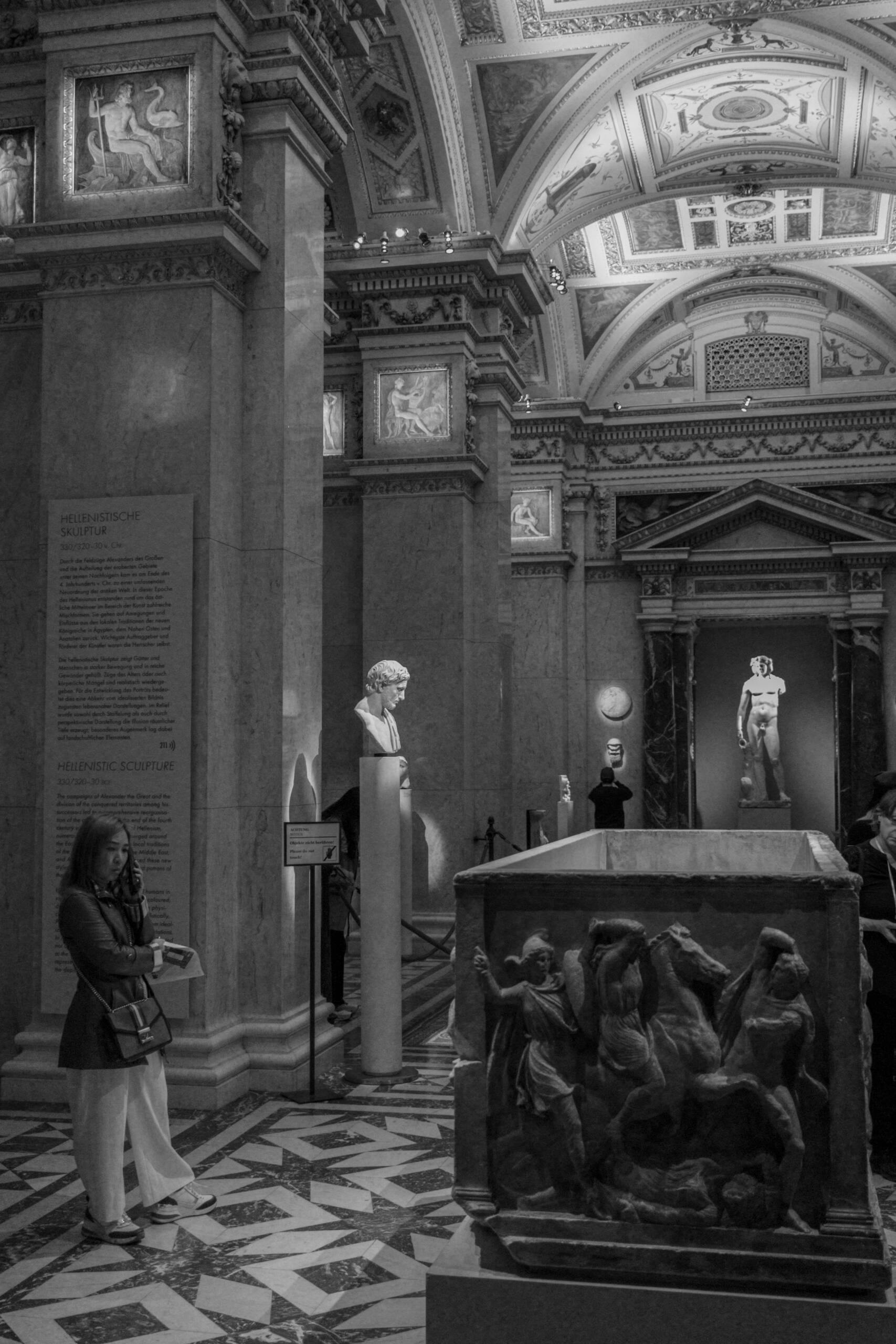
The supply side is easy enough to explain. Roman elites shifted from cremation to burial across the second century, and demand for stone containers went up fast. Workshops answered it the way workshops do. Quarries in Asia Minor and the Greek islands roughed out blanks, shipped them half-finished by sea, and left the faces blank so a portrait could be cut to order at the destination. You bought a scene off the shelf. Battle, hunt, myth, the seasons, a wedding. Then you got your own head carved into the general’s shoulders.
Battle scenes were the aggressive option. Greeks against Amazons, Romans against Gauls, all of it working the same argument: the man in the box was on the side of order, and whoever he trampled was not. Nobody buying one in the third century thought they were commissioning a history painting. It was a claim about the dead, made in the most durable material available.
Then the empire ended and the boxes stayed useful
Marble outlasts the reason it was cut. That’s the whole story of what happened next.
Some sarcophagi were emptied and refilled. Bishops, abbots, saints, and noble families in medieval Italy buried their own dead in Roman coffins, often without touching the pagan reliefs on the outside. Pisa is the well known case. Ancient sarcophagi were lined up around the cathedral and used for burials of prominent citizens, and one of them, carved with the Phaedra and Hippolytus story, was reused in the eleventh century for Beatrice of Lorraine. Two centuries later Nicola Pisano was standing in front of that stone learning how to carve figures. A Roman coffin taught the man who taught Italian sculpture.
Others got jobs that had nothing to do with the dead at all. Cut the ends off and you have a fountain basin. Set it under a spout in a courtyard and it’s a cistern. Put it in a farmyard and it’s a cattle trough. Hollow marble containers were valuable long before anybody cared who was originally inside them, and they show up doing all of this across Italy, southern France, Spain, and North Africa. A few ended up as holy water stoups, which is a strange promotion for an object covered in dying pagans.
Survival was an accident of usefulness
Here’s the part that reframes every antiquities hall you’ve ever walked through.
The sarcophagi that survive are overwhelmingly the ones that stayed above ground and stayed useful. A coffin built into a church wall was maintained. A coffin holding water in a piazza was cleaned. A coffin sitting in a field was, sooner or later, broken up and burned in a limekiln, because marble makes excellent quicklime and quicklime makes mortar. Enormous quantities of ancient carving went into the kilns during the medieval and early modern centuries. Whole classes of object are gone for no better reason than that nobody found a second use for them.
So the collection in Vienna is not a sample of what Romans made. It’s a sample of what stayed handy. The battle sarcophagi that made it are the ones somebody wanted, in a church or a courtyard or a garden, long after the family that commissioned them had been forgotten.
The rope around it now is the newest thing in the room. For most of its existence the object was there to be used, moved, filled, drained, and repurposed by people who saw no reason to be reverent about it. The reverence is recent. The coffin has been many things, and a museum piece is only the latest job.
It’s still doing better than the ones that went into the kiln.