The Met's Caracalla Denarius Promised Imperial Heirs and Then Rome Erased the Bride
The coin is silver, struck at Rome, and weighs under four grams. On the front there is no emperor at all. The bust is a woman’s, draped, with the legend PLAVTILLAE AVGVSTAE running around her. Turn it over and two figures stand clasping right hands, Caracalla and his wife Plautilla, under the words PROPAGO IMPERI. The empire’s continuation. Heirs, in other words, promised on the currency.
The Met dates it between 202 and 205 CE. Those three years are the entire window in which this coin made sense, and it is worth understanding why the window shut.
The Handshake Was a Legal Claim
The clasped right hands are not affection. Romans called the gesture dextrarum iunctio and used it to signify a lawful marriage, which is why it turns up constantly on wedding imagery and on the tombstones of couples who wanted the relationship recorded as legitimate.
Put it on a coin with PROPAGO IMPERI and you have a specific political statement. The Severan dynasty was barely a decade old in 202, founded by a provincial general who had taken the throne in a civil war, and dynasties that young need to look permanent. A marriage on the coinage says the succession is arranged. A promise of children says it will keep going after that.
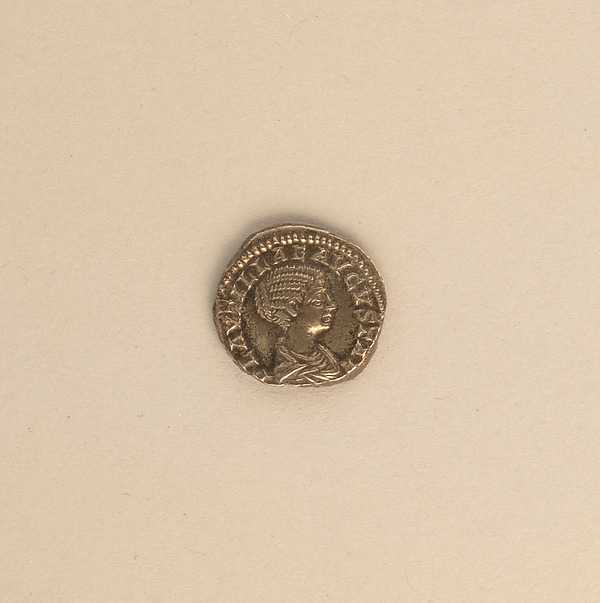
Coins were the right medium for saying it. Nothing else the Roman state produced reached so many people so reliably. Statues stood in cities, inscriptions stood where they were carved, but silver moved through every province and every hand, and a soldier being paid in denarii handled the government’s messaging every single time he got his wages. This was the empire’s mass distribution channel, and it ran on something people were obliged to keep.
The Marriage Was Her Father’s Deal
Plautilla was the daughter of Gaius Fulvius Plautianus, a man from Leptis Magna in North Africa who was Septimius Severus’s cousin, his praetorian prefect, and by most measures the second most powerful person in the empire. He arranged his daughter’s wedding to the emperor’s son and heir in April 202, with a ceremony extravagant enough that the sources remark on it.
Caracalla wanted none of it. The surviving histories are blunt that he loathed her from the start, and at least one modern historian has doubted the marriage was ever consummated, though the coinage hints they may have had a daughter around 204. What is clear is that the union existed to formalise Plautianus’s grip on the succession, and that the groom understood this perfectly.
On 22 January 205, Plautianus was accused of plotting against Severus and executed. His property was seized. Plautilla and her brother were sent to Sicily, then to Lipari, where the conditions were reportedly severe. They stayed there for six years.
Septimius Severus died on 4 February 211. Caracalla became emperor, murdered his brother Geta before the year was out, and had Plautilla strangled. She was somewhere around twenty-five.
Rome Tried to Recall the Message
What follows is the part that makes this coin worth looking at rather than just reading about. A Roman regime that wanted someone forgotten went after the physical record, and it was thorough.
There is an arch still standing in the Forum Boarium, put up in 204 by the city’s bankers and cattle merchants in honour of the imperial family. Its relief panels originally included Plautianus and Plautilla. They were chiselled off after 205. Geta was chiselled off after 211. You can stand in front of it today and see the blank spaces where three members of the ruling house used to be, cut away on the orders of the man who married one of them.
The coins were harder. Silver with Plautilla’s face on it was pulled in and melted where the state could reach it, which is why her issues are scarcer than her three years as Augusta would suggest. But a denarius is worth its metal to whoever is holding it, and people do not hand in money because a portrait has become politically awkward. Some of it stayed out there, in purses and pots and buried hoards, carrying a dynastic advertisement that the government had formally withdrawn.
The Met bought this one in 1908, and it sits in Gallery 169 doing exactly what it was struck to do. It announces a marriage, and it promises the empire an heir.
Every person on it died violently, and the promise was never kept.